
The Importance of Creative Education in Modern Classrooms
How creative learning approaches help students think critically and discover their talents
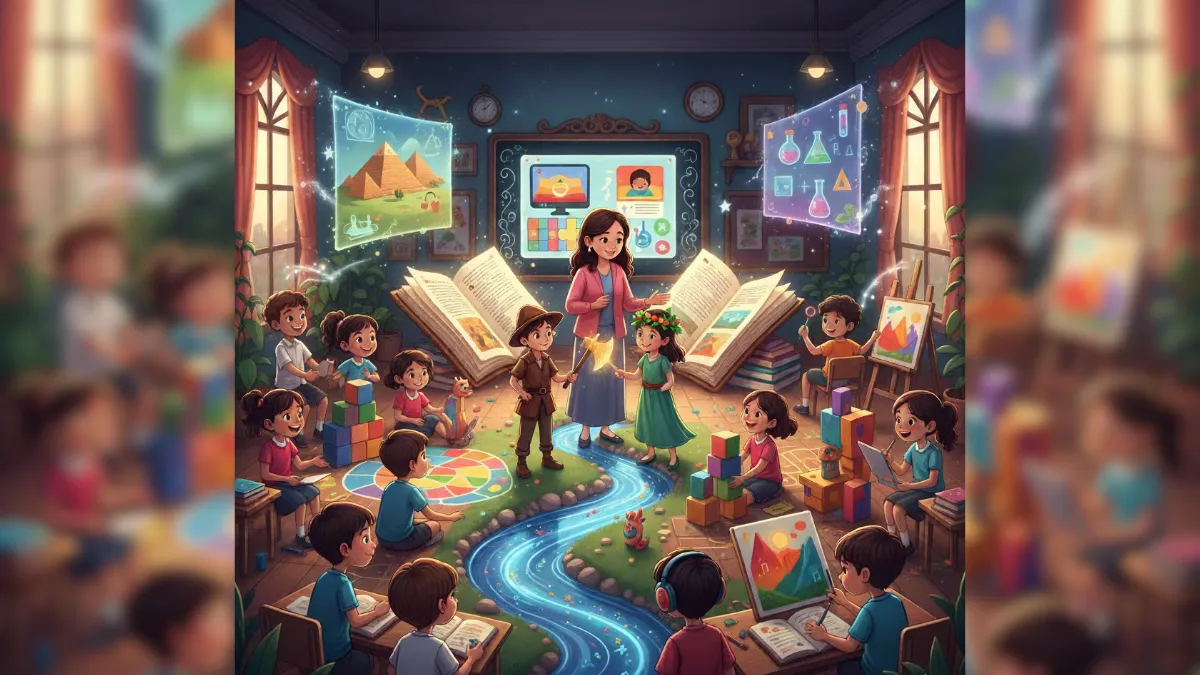
Education is not just about reading textbooks and taking exams. It is about learning in a way that helps us think more critically, understand more clearly, and enjoy the process. Many students feel bored in class because the same method is used every day: the teacher explains, students write, and then forget everything after the exams. But what if learning could be fun, exciting, and full of new ideas? That is where creative education comes in.
Creative education involves utilizing innovative and engaging methods to teach and learn. For example, instead of just reading textbooks, teachers can use videos, games, role-plays, art, music, and real-life examples. Science can be taught through experiments, history through storytelling, and math through puzzles. Group activities and projects make subjects more enjoyable and help students develop teamwork skills. When learning becomes like playing or solving a mystery, we become more curious and want to know more.
I remember once in class 7, we had a special English period where our teacher told us not to open our books. She asked us to form groups and write a short play based on any moral story we knew. My group chose the story ‘The Honest Woodcutter.’ We acted it out in front of the class. Some of us made props, others acted, and a few wrote the dialogues. That one class taught me more about teamwork, creativity, and expression than many regular lessons ever could.
Creative education teaches us many valuable lessons. First, it helps us become better problem-solvers. When we are encouraged to think in different ways, we learn how to face challenges. Second, it builds confidence. When we present, act, or create something on our own, we feel proud and strong. Third, it helps us discover our talents. Some students are good at drawing, some at explaining, some at acting or writing, and creative learning gives everyone a chance. Lastly, it makes education less stressful and more joyful.
Students should also try to learn creatively. Don’t always stick to rote learning. Try explaining topics to friends, drawing mind maps, watching educational videos, or even making your own quiz. Ask questions and be curious. Remember, it is not about just marks, but about what you really understand and remember; that's what real learning is.
In the end, education should not be a burden. It should be a journey of discovery. If schools, teachers, and students all work together to make learning more creative, our classrooms could become places of imagination, excitement, and growth. Let’s all take small steps to bring more creativity and joy into our learning.
Have something to say?
Share your ideas, stories, or opinions with other students.