

Mandi Shivratri Festival in Himachal Pradesh: A Celebration of Faith and Tradition
Shivratri in Mandi is a grand spectacle of spirituality and culture. From the arrival of local deities to folk dances and musical performances, the town comes alive with devotion and vibrant traditions during this holy week
Shivratri is one of the most important festivals in the Hindu tradition. In Mandi, Himachal Pradesh, however, it is celebrated in a very special way. The town, also called Chhoti Kashi because of its many ancient temples, comes alive with devotion and joy during this time.
The history of Mandi Shivratri dates back to the 16th century when Raja Ajbar Sen founded the town. Later, in the 18th century, Raja Ishwari Sen gave the festival its present form. After returning from Mughal captivity, he dedicated his kingdom to Lord Madhav Rai (believed to be a form of Lord Vishnu) and declared the deity as the true ruler of Mandi. Since then, Shivratri has been celebrated as a grand state festival.
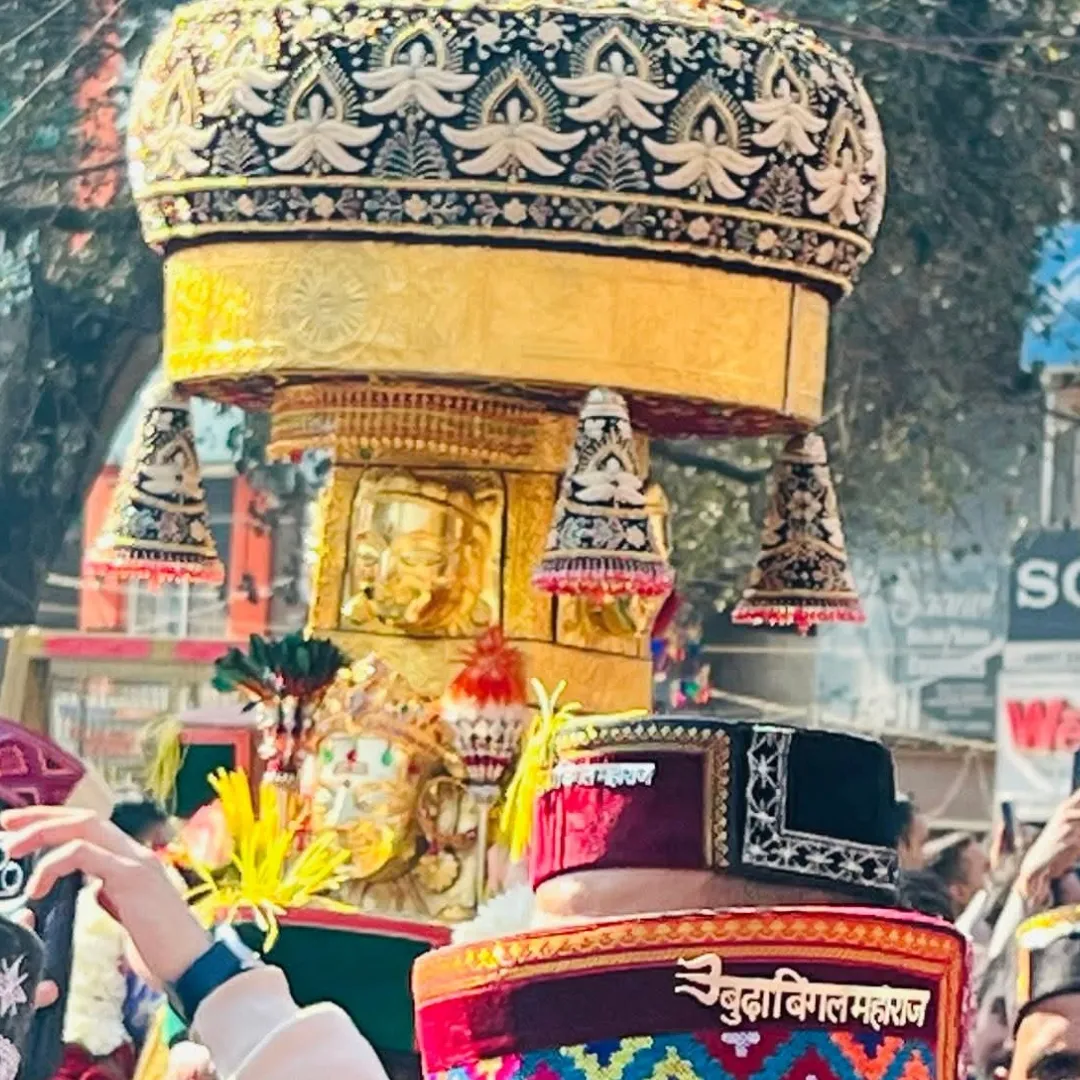
Mandi Shivratri procession with decorated deity raths at Paddal Ground
The celebrations begin with the arrival of Dev Kamrunag at the historic Madhav Rai Temple. Then, the main procession, called the Jaleb, takes place. Lord Madhav Rai is carried in a beautifully decorated rath (palanquin) to the Paddal Ground, which becomes the center of all activities.
One of the most special aspects of Mandi Shivratri is the arrival of hundreds of deities from nearby villages and valleys. Each deity is brought in a decorated rath, carried on the shoulders of devotees. The raths are adorned with colorful cloth, ornaments, and sacred symbols. Traditional musical instruments like drums, shehnai, and narsingha are played as the deities enter the town, creating an atmosphere full of energy, devotion, and excitement.
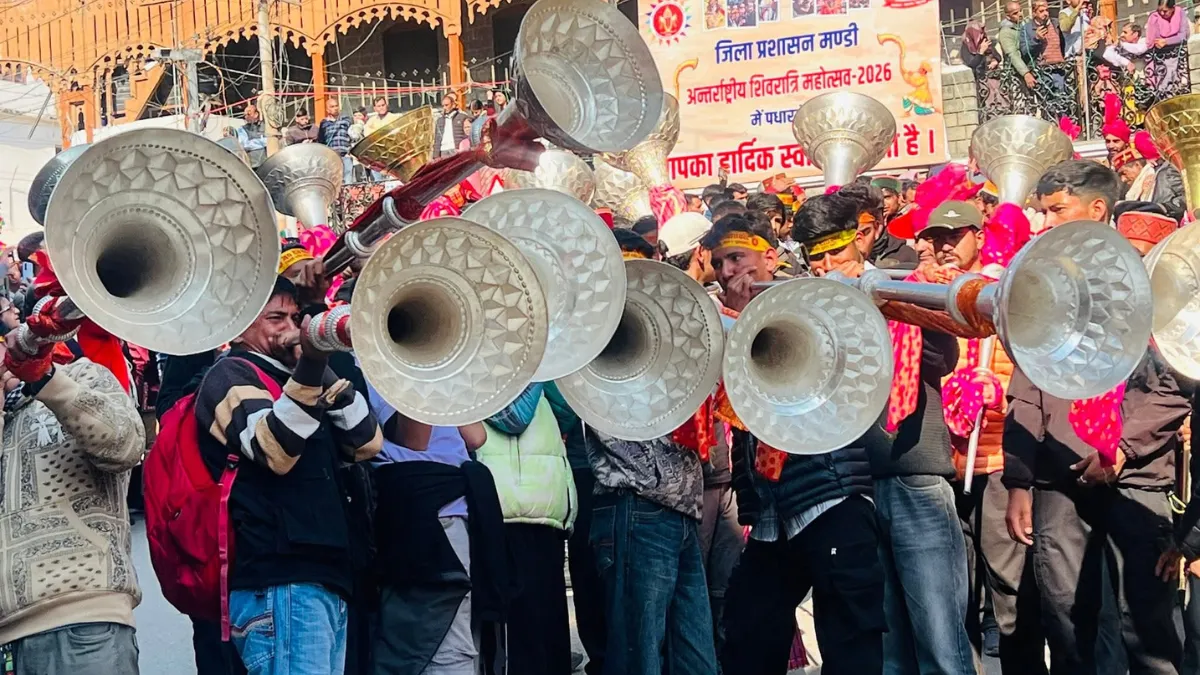
Traditional drums, shehnai, and narsingha echo through Mandi during Maha Shivaratri procession
During the week-long festival, the deities stay at the Paddal Ground in special camps. People visit them, offer prayers, and receive blessings. It is a beautiful example of unity, as all the deities gather together in one place.
At the end of the festival, a farewell ceremony is held. After paying respect to Lord Madhav Rai, the deities begin their journey back to their villages. The departure is emotional but peaceful, as devotees believe the deities are returning home with divine blessings.
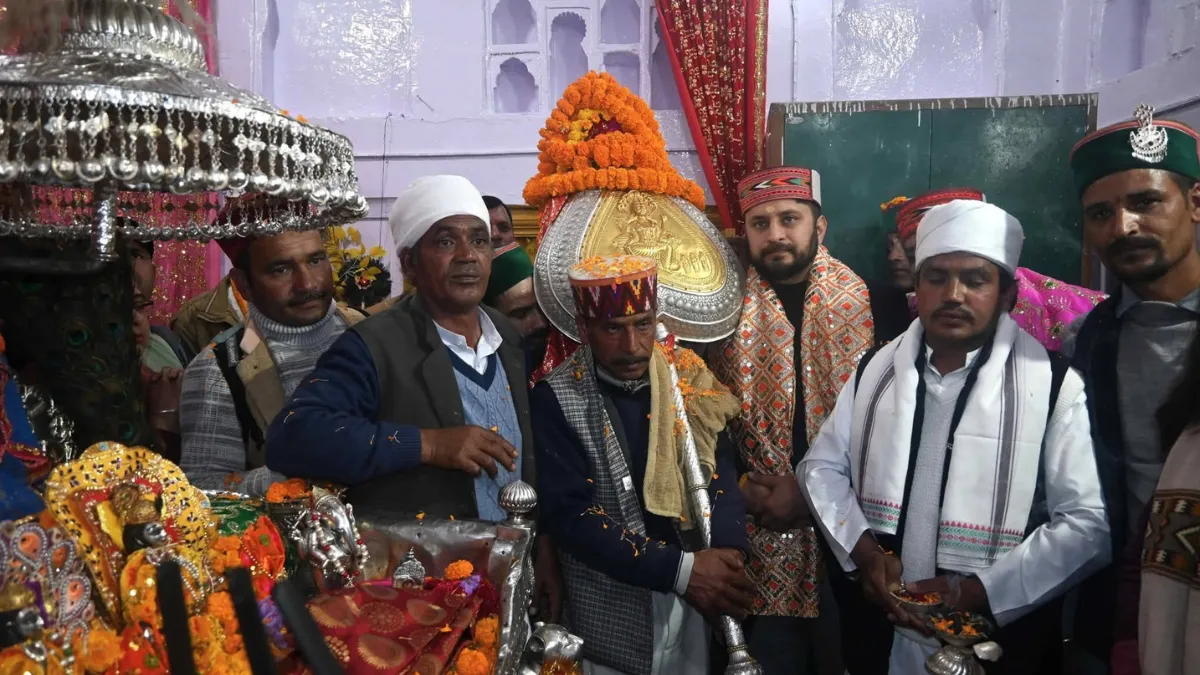
Devotees offering prayers and performing rituals during Maha Shivaratri in Mandi
Along with religious rituals, the festival also includes cultural programs, folk dances like Nati, exhibitions, fairs, and musical nights. It is not just a religious event but also a celebration of Himachal’s rich culture and traditions.
During Shivratri, Mandi truly becomes a ‘Cavalcade of Divinity’- a grand procession of faith, culture, and togetherness.
Have something to say?
Share your ideas, stories, or opinions with other students.