
India's Sacred Rivers: The Growing Challenge of Pollution and Responsibility
Explore the connection between India’s sacred rivers and rising pollution. Learn why true respect for rivers requires conservation, responsibility, and sustainable actions
In India, rivers are far more than flowing water. They are mothers, goddesses, and lifelines. We fold our hands before them, offer flowers, light lamps, and pray for blessings. From childhood, we are taught that rivers are sacred.
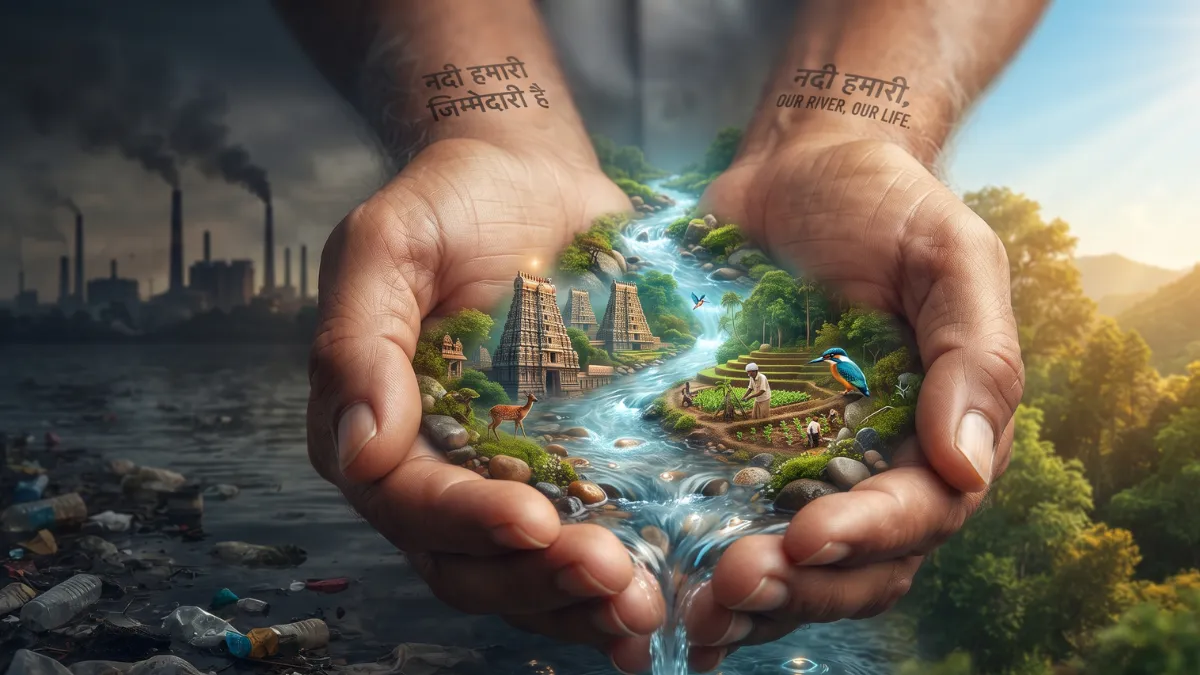
Hands holding a symbolic river reflecting Indian temples, farmers, forests, and wildlife, showing hope for river conservation
Yet, the painful irony is that the very rivers we worship are also the ones we continue to pollute. Every day, countless tonnes of plastic, sewage, industrial waste, and religious offerings, all wrapped in non-biodegradable materials, find their way into our rivers. Festivals that celebrate faith often leave behind mountains of waste. It is heartbreaking to see a river that is worshipped in the morning become a dumping ground by evening.
This contradiction forces us to ask ourselves a difficult question: Is our devotion real if our actions cause harm?
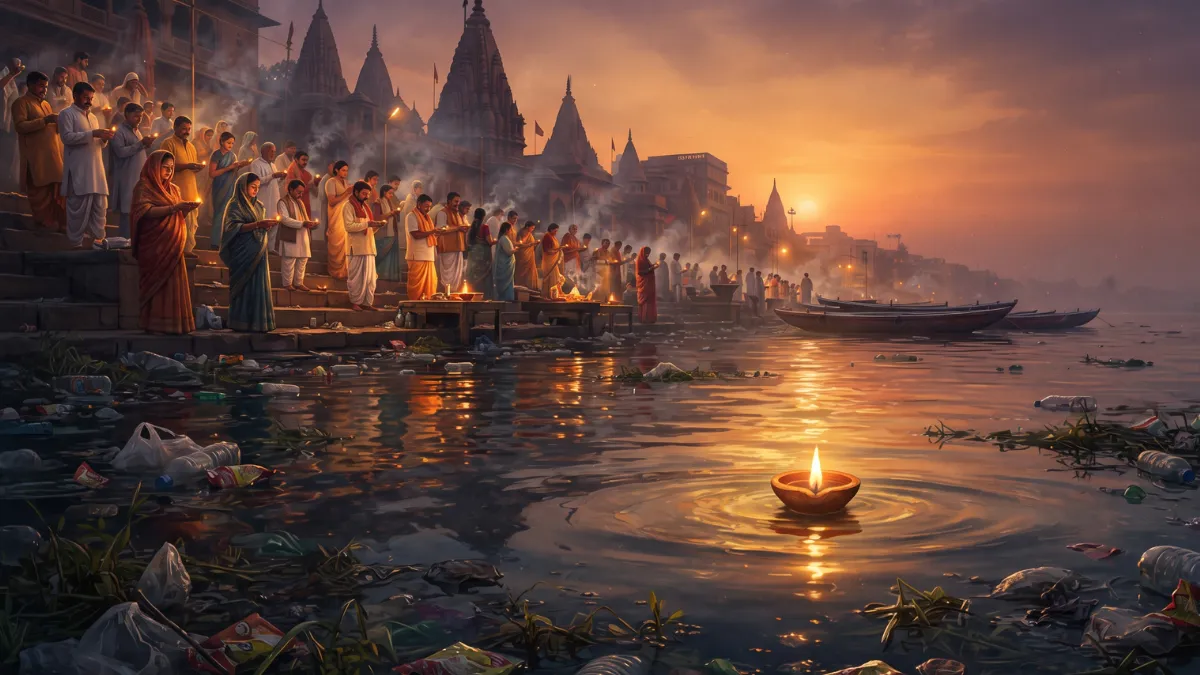
Evening river aarti scene with a glowing diya, temple silhouettes, and visible pollution highlighting environmental responsibility
Perhaps the problem does not lie in our traditions, but in the way we practise them. True respect for a river is not shown through rituals alone. It is reflected in keeping its waters clean, protecting its biodiversity, and ensuring that future generations inherit living rivers, not dying ones. Faith without responsibility becomes empty symbolism.
Rivers have carried our history, nourished our fields, quenched our thirst, and inspired our civilisation for thousands of years. They ask for nothing in return except care. If we continue to exploit them while claiming to honour them, we are not only betraying nature but also the very values our culture teaches us.
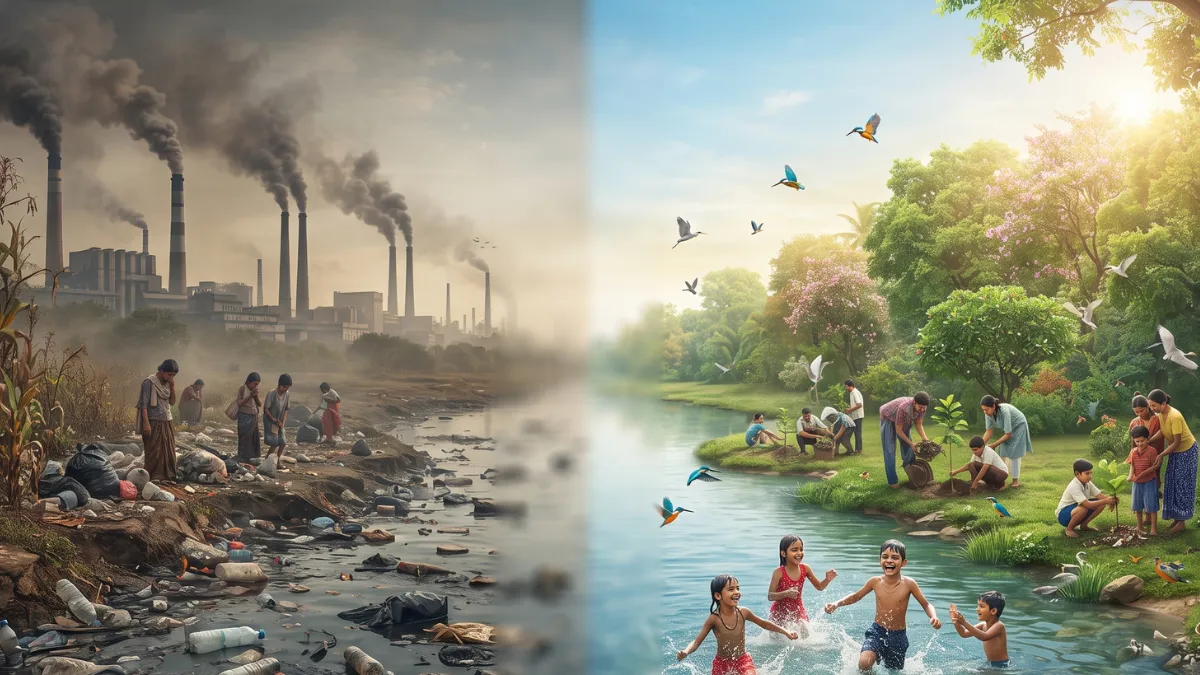
Split-screen Indian river showing pollution on one side and a clean, protected natural future on the other
It is time to redefine worship. The greatest offering we can make to our rivers is not flowers or incense but clean water, responsible habits, and collective action. Only when our actions reflect our prayers will our reverence become meaningful. After all, a river cannot bless us if we do not first protect it.

Have something to say?
Share your ideas, stories, or opinions with other students.