
Supreme Court Extends CBSE Three-Language Relief for Class 6 Students
The Supreme Court extends CBSE three-language relief for Class 6 students this year. Here's what schools and parents need to know.
The Supreme Court on September 28, 2026, has asked the Central Board of Secondary Education (CBSE) to extend the existing relaxations under its three-language policy to Class 6 students.
According to the officials, now students in Class 6 will not have to take a board exam in the third language in Class 10, and the subject will be assessed only internally by schools. Earlier, CBSE introduced a new rule for every Class 6, 7, 8 and 9 student that they must study three languages instead of two.
The board marked these languages as R1, R2 and R3, and said at least two of the three had to be Indian languages.
Solicitor General Tushar Mehta, appearing for CBSE, told the Supreme Court that textbooks and logistics for the new policy have been arranged. He said that out of 28,819 schools, 98.8% have already implemented the CBSE three-language policy. The bench noted that the remaining 1.2% means around 300 schools have not yet done so, and called this a concern.
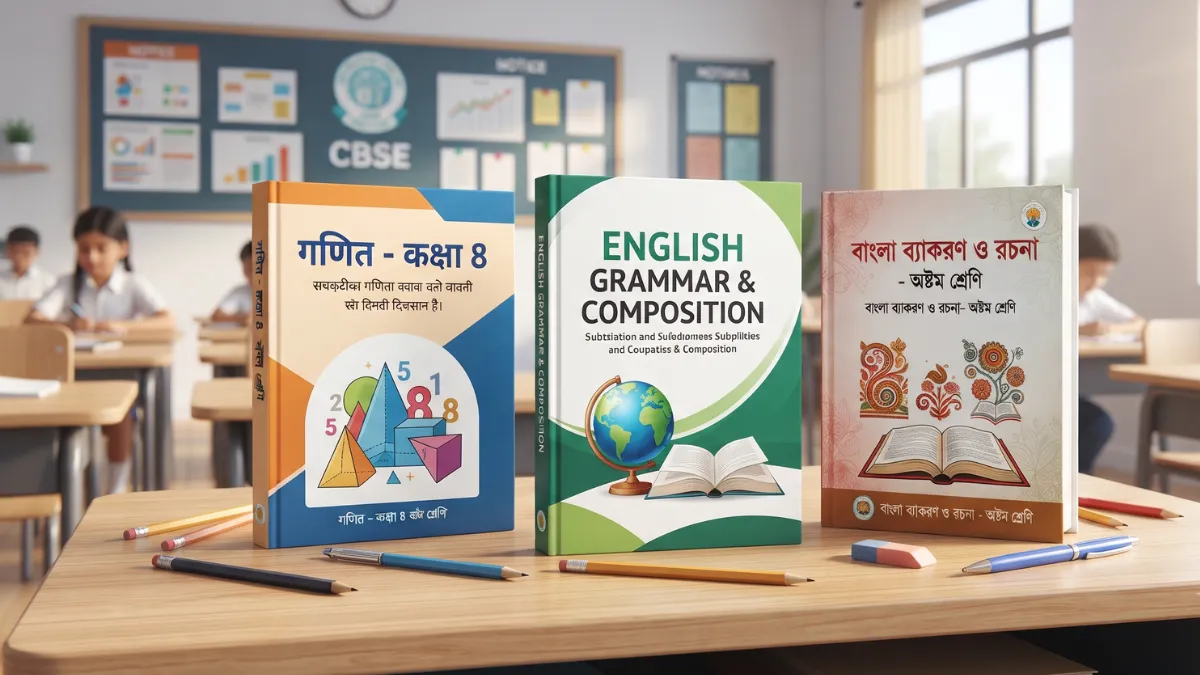
Three school textbooks representing three languages on a classroom desk
What Class 6 Students Can Expect?
The Supreme Court has directed CBSE to extend to current Class 6 students the transitional relaxation already given to Classes 7, 8 and 9. This means:
- Class 6 students will not have to take a Class 10 board exam in the third language.
- The third language will be assessed only through internal assessment by schools, with no bearing on board results.
- The full three-language requirement will apply to this batch from April 1, 2027.
School student with textbooks, subtle Supreme Court silhouette
How CBSE Three-Language Policy Began
The three-language rule comes from the National Education Policy (NEP) 2020, a government plan to reshape students' learning in India.
NEP 2020 says children should learn three languages while growing up, and at least two of them must be Indian languages. It also recommends that early education be given in the mother tongue or regional language. The policy says learning more languages at an early age helps in the brain development of children and can improve their job opportunities later in life.
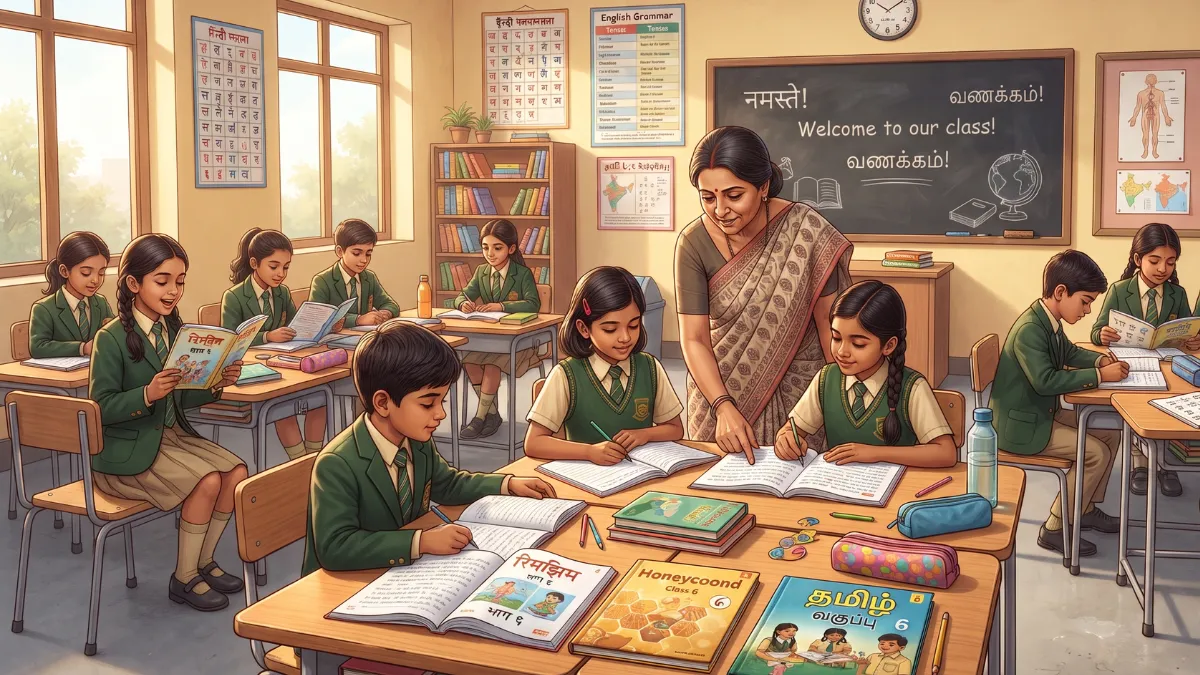
Class 6 classroom with students studying three languages, teacher and books
Future Forward: What’s Next for CBSE
With the Supreme Court's relief for Class 6, attention now turns to how CBSE will implement the three-language policy in the coming months. The board is expected to ensure schools have trained language teachers, suitable textbooks and a clear rollout plan.
CBSE has told the court that textbooks and logistics have been arranged, and that most schools have already implemented the policy. But around 300 schools have yet to do so, and some states have objected to the policy. How CBSE addresses these concerns will decide whether the policy works smoothly on the ground.